The Stranger on the Beach: the full story
Part One · The Shore
A storm had broken a traveller's raft to pieces. He swam for two days and two nights. At last he reached an island, tired out. He crawled under two olive trees, piled leaves over himself, and fell asleep. The island was quiet that night.
That same night, the goddess Athena slipped into the dream of a princess named Nausicaa, whose father was king of the island. In the dream, a friend said, "All your family's clothes are dirty. Take a wagon to the river in the morning, and wash them."
Nausicaa woke up and told her father about her dream. He smiled and gave her a wagon with two mules. Her friends helped her pile the dirty clothes on top, with a basket of bread and cheese for lunch. Nausicaa was glad to help.
Part Two · The River
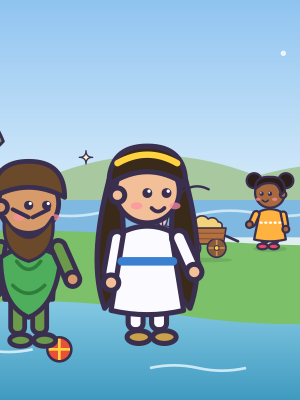
At the river, the girls stamped on the clothes in the clear, cold water. The sun shone on the river. Then they spread them on the pebbles to dry. They ate their lunch in the sun and began to play with a ball.
Nausicaa threw the ball to a friend, but the friend dropped it. It rolled into the river and drifted off, and all the girls shrieked. Their cries woke the man who was sleeping under the olive trees. Everyone stopped to look.
He crept out of the bushes, with leaves in his hair and his clothes in rags. He looked tired and lost. The girls screamed and ran in every direction. Nausicaa alone stayed where she was, because Athena had made her feel brave.
The stranger kept his distance and spoke gently. "I have been twenty days at sea," he said. "Can you tell me where I am?" Nausicaa answered as a king's daughter should. "You will not go without clothes or kindness in our land."
"Come back, girls!" she called. "He will not hurt us. Every stranger who comes to us deserves help." So the girls gave him a cloak, oil to wash away the salt, and bread to eat. When he came back from the river, he looked quite different.
Part Three · The Palace
"Follow our wagon to the city," said Nausicaa. "My mother, Queen Arete, will help you." The princess and her friends led the way with the stranger at their side, and they all arrived at the palace together. Nobody was left out on the road.
The palace had doors of gold and a garden where fruit hung ripe all year. The stranger knelt before the queen and asked for her help. Nobody said a word for a while. Then the king stood up and led him to a silver chair.
"A guest should never sit in the dust," said the king. He ordered a meal, and he promised the stranger a ship and men to row it. The next evening there would be a great feast in the stranger's honor.
At the feast, a blind singer sang about the war at Troy, and about the wooden horse that the Greeks had built. The stranger pulled his cloak over his face, and a tear rolled down his cheek. Only the king noticed.
"Nobody has asked for your name," the king said gently, "because we believe a guest must be fed first and questioned afterward. But now we would like to hear it. Why are you sad?" At last the stranger put down his cloak.
"I am Odysseus, the son of Laertes," he said. "My home is the island of Ithaca, and I left home twenty years ago." Nausicaa had given him help when he needed it most, and soon a ship took him home.
 The Tooth on the Beach
 Arachne and the Goddess
 Flying Too High
 Guests at the Cottage