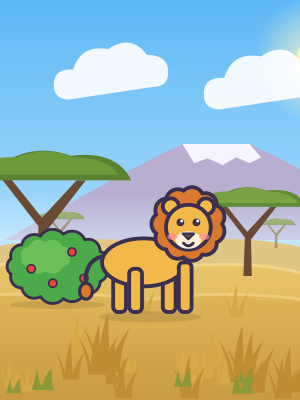
Do animals have families? Yes, and many of them work like teams. Wolves live in family groups called packs. Lions live in family groups called prides. Elephants live in herds. A herd is mostly related females and their young. A wolf pack is usually a mother, a father and their pups.
Wolf pups are born in a den. Pack members bring food to the wolf mother and her small pups. Then she does not have to leave the den. All the wolves in the pack help take care of the pups. Pups start hunting with the pack at about six to ten months old.
Lionesses in a pride help raise the cubs together. Lion cubs can nurse from any lioness in the pride, not only their own mother. Female lions are the main hunters of the pride. Elephant calves stay close to their mothers, and other elephants in the herd help look after them. The leader of an African elephant herd is the matriarch.
Meerkats live in groups called mobs. Other meerkats help take care of the young. One meerkat acts as a sentry and warns the others of danger. Young meerkats do not know what to eat, so their mother or another adult teaches them.
Gorillas live in a group called a troop. A big male called a silverback leads it. Each morning he leads the troop to a place where there is lots of food. Flamingo chicks gather in groups, and their parents still visit to feed them. Flamingo parents and chicks know each other by their calls.
Not every animal lives in a group. Tigers usually live alone, except for a mother with her cubs. Young tigers learn to hunt by copying their mother. Other animals work as a big team. In a naked mole-rat colony, one female called the queen has the babies. The workers help raise her pups. The pups are their brothers and sisters.
Words to know
- sentry: lookout guard
- matriarch: female herd leader
- silverback: big male gorilla
- colony: living group
- nurse: drink milk
The short version
Yes, many animals live in families. Wolves live in packs, lions in prides, elephants in herds and meerkats in mobs. In many of these groups, the adults share the work of caring for the young, but tigers usually live alone, except for a mother with her cubs.
Quick facts
- Wolves live in family groups called packs, usually a mother, a father and their pups.
- Lions live in prides, and lion cubs can nurse from any lioness in the pride.
- An African elephant herd is led by the matriarch, usually the oldest and most experienced female.
- In a meerkat mob, one meerkat acts as a sentry and warns the others of danger.
- Tigers usually live alone, except for a mother with her cubs.
Do all animals live in families?
No. Not every animal lives in a group. Tigers usually live alone, except for a mother with her cubs, but wolves, lions, elephants and meerkats all live in family groups.
Who takes care of baby wolves?
A wolf pack is usually a mother, a father and their pups. Pups are born in a den, and all the wolves in the pack help take care of them. Pack members even bring food to the mother and her small pups.