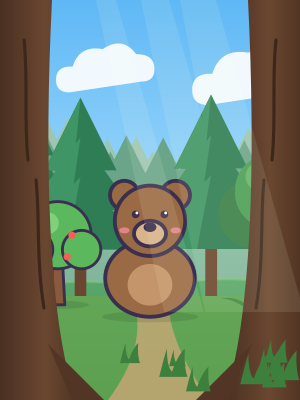
A grizzly bear is one kind of brown bear. Scientists agree there is only one species of brown bear. Brown bears live over a larger area than any other kind of bear. A grizzly's fur can be anything from light brown to nearly black.
You may have heard that grizzly bears eat only meat. In fact, most of what a brown bear eats is plants. Grizzlies eat grasses, roots and bulbs. In spring, they eat new green grasses and other young plants.
Grizzlies also eat fish, such as salmon. Brown bears on the coast depend on the yearly runs of salmon swimming up rivers. Brown bears in parts of coastal Alaska tend to be the largest, from eating salmon rich in fat every summer. Some coastal Alaskan brown bear males weigh more than 770 kilograms (1,700 pounds).
In the lower 48 states, adult male grizzly bears average 400 to 600 pounds (200 to 300 kilograms). An adult brown bear's body length, measured from head to rump, can range from about 1 meter to nearly 3 meters.
In short sprints, grizzly and brown bears can run about 35 to 40 miles per hour: the National Wildlife Federation gives 35 mph, and Yellowstone National Park says up to 40 mph.
Hyperphagia is the time in fall when a grizzly eats far more than usual and turns the extra food into fat. It lasts two to four months before the bear enters its den. A female grizzly that has not stored enough fat in the fall may not have cubs that winter.
A female grizzly mates in spring or early summer, but the embryo does not start to grow until late fall. Grizzly bears have one of the slowest reproductive rates among land mammals. A mother usually has about two cubs at a time, and can have as many as four. Cubs stay with their mother for about two to three years.
A bear's winter sleep is not true hibernation, because its body temperature does not drop very far. A bear in its den lives on the fat it stored up during the fall. All winter in the den, a grizzly bear does not eat or drink.
Brown bears in the lower 48 states lost about 98 percent of their former range. As of November 2026, grizzly bears in the lower 48 states are protected as a threatened species under the Endangered Species Act.
Words to know
- species: kind of animal
- hyperphagia: eating a lot
- embryo: unborn baby
- hibernation: deep winter sleep