The jaguar is the third-largest cat in the world, and only lions and tigers are bigger. It is the largest cat in the Americas, and it is the only big cat that lives there. A typical adult jaguar weighs between about 100 and 250 pounds. The head and body of an adult jaguar measure up to about 6 feet, not counting the tail. Male jaguars are usually 10 to 20 percent larger than females.
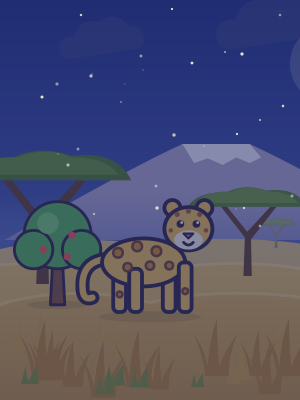
Jaguars and leopards are two kinds of cat, and the coat can help tell them apart. A jaguar's coat is usually pale yellow, tan or reddish yellow, with black rosettes, which are dark spots. The rosettes of a jaguar often have a spot inside, but the rosettes of a leopard do not. The spotted coat also helps a jaguar hide in forests and grasslands.
Some jaguars are black, and they are called melanistic jaguars. "Black panther" is a name for black leopards and black jaguars. It is not a separate kind of cat.
A jaguar is more heavily built than a leopard, with a stockier body and a shorter, thicker tail. Its large, rounded paws help it swim.
Leopards live in Africa and Asia, and jaguars live in the Americas. Jaguars live in Central and South America, in places such as the Amazon. They live in tropical rainforests, and also in swamps, grasslands and dry places. They usually live near water, such as rivers and swamps. Jaguars are strong swimmers. When forests flood, jaguars swim from place to place.
Jaguars do most of their hunting at night. A jaguar hunts by sneaking close and then pouncing. Jaguars hunt on the ground, and they sometimes climb a tree to hunt. Jaguars eat many kinds of animals, such as deer. Jaguars are a keystone species: they help keep the number of other animals in balance.
Jaguars once lived from the southwestern United States down to Argentina. Today they live in fewer places. Jaguars lose forest to farms and ranches, and the forest that is left is broken into patches. As of November 2026, about 173,000 jaguars were estimated to live in the wild in 2018.
As of November 2026, the International Union for Conservation of Nature lists the jaguar as Near Threatened. The Jaguar Corridor is a plan to link the places where jaguars live, from Mexico to Argentina. As of November 2026, an international treaty called CITES bans selling jaguar skins and body parts across borders.
Jaguars live alone. A mother jaguar has one to four cubs at a time. The cubs are born with their eyes closed, and the mother raises them alone. Young jaguars stay with their mother for about two years.
Words to know
- rosettes: dark spots
- melanistic: colored black
- keystone: balances animal numbers
- pouncing: jumping at