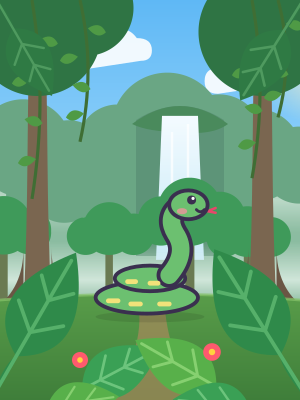
A snake has no legs. It bends its body in curves and pushes against things. This is called serpentine movement.
Wide, flat scales on its belly hold the ground. They work like tire treads. This helps the snake move.
A snake moves its forked tongue. The tongue picks up chemicals from air, ground or water.
Many snakes hunt by ambush. They hide and wait. An animal comes close. The snake does not chase it.
A snake can swallow its food whole. Stretchy ligaments hold its jaws loosely. Even wide meals can fit.
Snakes eat other animals. The food can be mice, rats, rabbits, fish or frogs. Some even eat other snakes.
A snake sheds its old skin as it grows. The old skin comes off in one piece.
Most snakes lay eggs. Some, such as sea snakes, give birth to live young.
Snakes live on every continent except Antarctica. Sidewinders live in sandy deserts. King cobras live in rain forests and plains.
Leave a wild snake alone. It will usually go its own way. Is one near home? A grown-up can call animal control.
Words to know
- serpentine: curvy, snakelike
- ligaments: stretchy bands
- ambush: hide, then catch
- chemicals: tiny particles
- continent: huge land area