A Rabbit Is Not a Small Cat: the full story
Part One · The animal that hides
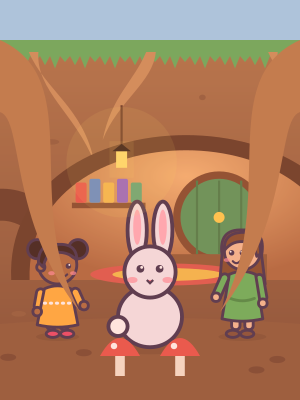
For the first week, Moss and Juniper gave me nothing to go on. They ate, drank and sat in their house with perfectly calm faces. I had grown up with a cat who yowled at the smallest discomfort, so I assumed that quiet meant fine. My aunt, who had fostered rabbits before, told me that was exactly the trap. Rabbits are a prey species, and they rarely show obvious signs of distress or discomfort. An animal that advertises weakness gets eaten. So the owner has to learn the routine well enough to notice when it changes, and that first week I started a notebook with the date, what each rabbit ate and what the droppings looked like.
Almost every rule I was handed turned out to trace back to that one fact. Pet rabbits are related to the wild European rabbit, and the biology and behavior of the two are very similar. Wild rabbits live in interconnecting underground tunnels, which can cover more than two acres and house fifty rabbits. For a startled rabbit it is natural to run and hide, and a thump of a hind foot can warn the others. Once I knew that, the hiding places in the pen stopped looking like decoration. The guidance is to provide as many as there are rabbits, with one extra if possible.
Part Two · Hay, teeth and a second kind of dropping
Diet works the same way, as a chain of reasons. About eighty-five percent of what a rabbit eats should be hay and grass, with roughly ten percent leafy greens and five percent pellets. The hay does several jobs at once: it supplies fibre, keeps the digestive system functioning, and wears down teeth that never stop growing. An unsuitable diet can contribute to dental disease. Rabbits also make two kinds of droppings. The soft, moist ones, called caecotrophs, are eaten straight from the source and are an essential part of the diet. I will admit that I needed a day to get over that one. My aunt also pointed out that a sudden change of food can upset a rabbit's digestion, so any change is made gradually, after a word with the vet.
The fact that surprised me most was how much time a rabbit is supposed to spend eating. In the wild, rabbits spend around seventy percent of their time eating grass and other plants, mostly at dawn and dusk. That explains the schedule we keep: greens in the early morning and late afternoon, when the rabbits are most active, and hay available all day. It also explains why carrots do not belong in the main course. They are high in sugar and tend to contribute to weight gain and digestive problems. A rabbit that refuses its food is not being fussy. The guidance is to take it to a vet, because gut stasis, a slowdown or stopping of the movement of food through the digestive system, needs immediate attention.
Part Three · Room, company and the evidence on stress
Space was the one place where I could not find a tidy answer. One animal charity says that a home for two medium-sized rabbits should be no smaller than three meters by two by one, roughly ten feet by six and a half by three, including shelter and exercise area. It adds that a hutch on its own is never enough, and that each section must let a rabbit stand on its hind legs without its ears touching the roof. I found only that one guideline, so I treat the number as a floor to discuss with a vet, not a target. The same page gives a better test than any figure: rabbits should be able to choose where they rest, hide, eat, explore and interact, so that they feel secure and in control.
Company is where the evidence is clearest and the practice is furthest behind. Rabbits are highly social, yet 42 percent of pet rabbits in the UK lived alone in 2024. One rabbit needs another, unless a vet or a qualified behaviorist advises otherwise. Bonding is slow work: gradual, supervised introductions in a neutral space, after a vet visit, because a poor introduction can leave lasting bad associations. Neutering can reduce fighting and prevent reproductive cancers and accidental litters. Moss and Juniper came from a rescue center, which meant that the bonding and the neutering were already done. Whether a family takes rabbits on is a grown-up's decision, but nobody should assume a lone rabbit is a contented one.
Part Four · Reading a quiet animal
The most useful thing I read was about a mistake that looks like kindness. Turn a rabbit onto its back and it goes limp and still, and it can look like relaxation. It is tonic immobility, an involuntary fear response. Studies found that rabbits placed this way flatten their ears, widen their eyes and tense their muscles, and that they can show a faster heart and breathing rate and higher levels of the stress hormone corticosterone. The detail that stayed with me is the pattern: the more often a rabbit is laid on its back, the faster it goes still. That is not getting used to it. It is learning to expect it. Vets may use the response for some procedures when it avoids the risks of sedation, but only when necessary, and only by trained professionals.
Reading a quiet animal comes down to knowing its normal. Soft tooth grinding, with a sound like a cat's purr, means contentment; loud grinding can mean pain. A midair leap-twist, the binky, means joy. A thump can be a warning, or fear or frustration. Signs of illness include refusing food, being quieter than usual, a hunched sitting position and any change in droppings, and the advice is to contact the vet immediately. Healthy droppings, for the record, are round, hard and dry. What the sources do not offer, and what I will not either, is a home remedy. Only medicines recommended by a vet should ever be used, because other animals' medicines are dangerous to rabbits.
Part Five · Years, not weeks
Even the weather is part of the biology. The ideal temperature for rabbits is between ten and twenty degrees Celsius, roughly fifty to sixty-eight Fahrenheit. Pet rabbits lack the thick fur of wild rabbits, so they are more sensitive to cold, and they are vulnerable to heat stress, which is why my aunt moves their pen into the shade on warm days. In warm weather she also checks the fur and skin around each rabbit's rear end twice a day, because stuck droppings can attract flies. It is a grown-up's job, and it takes a minute. After touching the rabbits or their supplies we wash our hands with soap, because the CDC says children under five are more likely to get sick from the germs small pets can carry.
What I know now is less than what I thought I knew in the first week, and I think that is progress. A rabbit can live for 8 to 12 years if its diet, health care, housing and company are right, and some live longer. The RSPCA says they suit older children who can handle them gently, with adults ready to help and take over, and that no child should be the sole owner of any animal. Moss still hides when the doorbell rings, and Juniper still thumps at nothing I can see. I used to read that as rabbit nonsense. Now I read it as the oldest message in their language. Ask a grown-up to look at Peabody Pets with you. You will find it at pet.peabody.kids.
 Bats After Dark
 A Predator at the Window
 Beyond the Perfect Ten
 Black Beauty