Sink or float: does a bigger foil boat carry more blocks?
- 💧 Water
- 🧽 A bit messy
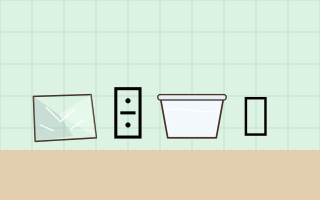
My hypothesis
If I change how big the foil boat is, then how many blocks it carries before it sinks will ______, because ______.
You fill in the blanks. Think about which boat has the most room for the blocks to spread out. A guess is a good because: the test finds out.
Change, measure, keep the same
CHANGE
how big the foil boat is: Small boat, Middle boat, Big boat
MEASURE
how many blocks it carries before it sinks, in blocks
KEEP THE SAME
- the same kind of foil
- the same blocks
- adding blocks one at a time
Scientists call the thing you change the independent variable and the thing you measure the dependent variable. The things you keep the same are the controls: if one of them changed too, you wouldn't know which change made the difference. Try each of the 3 levels 3 times.
What you need
- Foil: a small, a middle and a big square
- Dominoes, or small wooden blocks all the same size: about 20 small wooden blocks
- A tub of water
- Crayons or markers
Steps
- Grown-up: Your grown-up fills a big tub with water, a hand deep.
- Fold up the edges of each foil square to make three boats.
- Grown-up: With your grown-up, float the small boat on the water.
- Grown-up: With your grown-up at the tub, put in blocks one at a time, counting, until it sinks.
- Grown-up: Your grown-up dries the boat, and you test it two more times.
- Grown-up: With your grown-up, do three tests with the middle boat and three with the big boat.
- Colour a box for every block. Which boat carried the most?
5 steps are a grown-up's, marked above. Write each number down straight away, in the table below, so nothing is lost.
Your results table
Name ______________________ Fair day ____________
Question: Sink or float: does a bigger foil boat carry more blocks?
I changed: Boat I measured: how many blocks it carries before it sinks (blocks)
| Boat | Try 1 (blocks) | Try 2 (blocks) | Try 3 (blocks) |
|---|---|---|---|
| Small boat | |||
| Middle boat | |||
| Big boat |
MY GRAPH (a bar graph: boat along the bottom, blocks up the side)
What I noticed: ______________________________________________
Write each try's number in its box. Then draw a bar graph, one bar for each thing you tried.
Name ______________________ Fair day ____________
Question: Sink or float: does a bigger foil boat carry more blocks?
If I change how big the foil boat is, then how many blocks it carries before it sinks will ________________, because _____________________________________________
| I CHANGE | I MEASURE | I KEEP THE SAME |
|---|---|---|
| Boat: Small boat, Middle boat, Big boat | how many blocks it carries before it sinks (blocks) |
|
What I think will happen, in my own words:
Name ______________________ Fair day ____________
Question: Sink or float: does a bigger foil boat carry more blocks?
| Date | What I did | What I saw | What I think |
|---|---|---|---|
Name ______________________ Fair day ____________
Question: Sink or float: does a bigger foil boat carry more blocks?
| Date | What I did | What I saw | What I think |
|---|---|---|---|
Name ______________________ Fair day ____________
Question: Sink or float: does a bigger foil boat carry more blocks?
| Date | What I did | What I saw | What I think |
|---|---|---|---|
Name ______________________ Fair day ____________
Question: Sink or float: does a bigger foil boat carry more blocks?
My hypothesis was ☐ right ☐ partly right ☐ not right.
I know because my numbers show:
What surprised me, or what might have gone wrong (7th and up):
Next time I would test:
Idea: Change a second thing: make each boat with low sides and with high sides, and count the blocks for all six.
Why it works
A boat floats when it pushes enough water out of the way to hold up its load. A bigger boat pushes away more water, so it can carry more blocks before it sinks.
Going further (7th and up): Change a second thing: make each boat with low sides and with high sides, and count the blocks for all six.
My picture board
A kindergarten board is one page: the question, a guess to tick, a drawing of the test, a box coloured for each count, and what your child found out, in their words. Glue it to a folded card, or the middle of a tri-fold.
Sink or float: does a bigger foil boat carry more blocks?
I think… tick one:
- ☐ Small boat
- ☐ Middle boat
- ☐ Big boat
This is my test: draw it.
I counted: colour one box for each block, for my first try.
I found out:
Board layout
- ❓ Question (10 × 8 in): Sink or float: does a bigger foil boat carry more blocks?
- 💭 Hypothesis (10 × 9 in): If I change how big the foil boat is, then how many blocks it carries before it sinks will ______, because ______.
- 🧺 Materials (10 × 12 in): 4 things: see your list.
- 🪜 Steps (22 × 9 in): 7 steps, three tries at each level.
- 📊 Results (22 × 16 in): Your table (Boat down the side, tries across) and your bar graph.
- ✅ Conclusion (10 × 14 in): My hypothesis was right / partly right / not right. I know because…
Materials to list: Foil; Dominoes, or small wooden blocks all the same size; A tub of water; Crayons or markers.
Bring photos or drawings of your test. Nothing wet, hot, powered or alive on the table.
This project at your grade
| Kindergarten | Tries: three at each level (one is fine at a first fair). The table: levels and tries, numbers or pictures. The graph: a picture, or a simple bar graph. The conclusion: what happened, in their words. |
|---|
From 4th grade up, the table gets a mean column. See every project for kindergarten, or print a blank results table.
What a judge will ask
- What did you change, and what did you measure? I changed how big the foil boat is and measured how many blocks it carries before it sinks, in blocks.
- What did you keep the same, and why does that matter? I kept the same kind of foil and the same blocks the same, so the only difference was how big the foil boat is.
- How many times did you test it? 3 times at each of my 3 levels.
- If you did it again, what would you change or test next? I'd make each boat with low sides and with high sides, and count the blocks for all six.
Make it yours
Keep this project on this device and Peabody counts down to your fair day, with a plan for each day. Nothing is sent anywhere.
Try next
👨👩👧 For grown-ups and teachers: how much to help, the safety rules, and running a school fair. Science fair v0.16.1 · Checked .