The Northern Taurids for Kids
Next peak · 12 nights to go
Night of 11–12 November 2026 · Moon 8% · Quiet
A quiet one. Look at the Moon instead.
Up in the evening, a few an hour, and a chance of a fireball.
The next Northern Taurids peak is the night of 11–12 November 2026. A 8% Moon that sets before midnight, so the late hours are dark. Verdict: quiet. A quiet one. Look at the Moon instead. At best a dark sky gives about 5 an hour, by the American Meteor Society's calendar; the Moon is from astronomy-engine.
The Northern Taurids are the Southern Taurids' twin. They come a week later, in November, and are slow and few.
The Northern Taurids peak about a week after the Southern Taurids, with about five an hour. They come from the same big, old family of dust as Comet Encke, so they also make fireballs.
The Northern and Southern Taurids are two branches of one wide stream, and in early November they overlap. The Northern branch is linked to the asteroid 2004 TG10. Their low rate makes them a shower to notice while doing something else, like a Moon walk.
In early November both Taurid branches are active at once, so you are watching two showers.
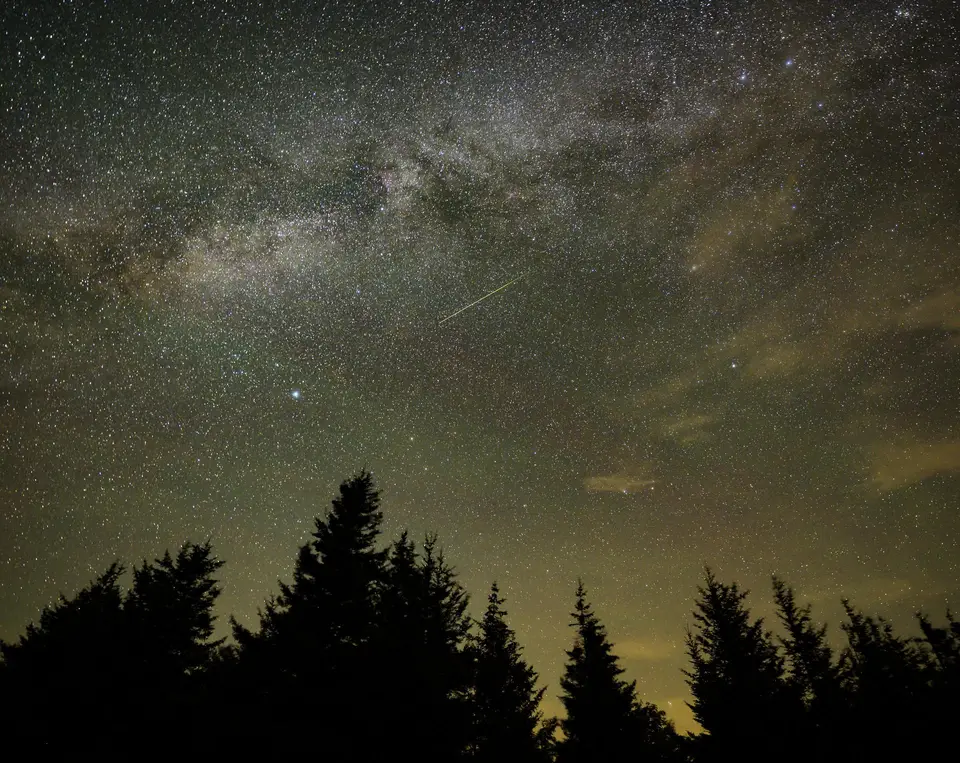
Which way to look, and when
East in the evening near the little dipper-shaped cluster called the Pleiades, high in the south by midnight.
Up all night, best around midnight. Active 13 October to 2 December.
Where does it come from?
The Northern Taurids are dust from the asteroid 2004 TG10, part of Comet Encke's family. The bits hit the air at about 29 kilometers a second and glow as they burn up. The streaks seem to start from Taurus, near the Pleiades, which is how the shower got its name.
Every peak in our table
| Night of 11–12 November 2026 | Quiet. A 8% Moon that sets before midnight, so the late hours are dark. |
|---|---|
| Night of 11–12 November 2027 | Quiet. A bright 96% Moon up for much of the night washes out the faint ones. |
Some calendars give a peak one night either side; a shower is active for days around it, so the nights next to the peak are worth a look too.
How to watch
- Go out with a grown-up, dressed warmer than you think, with a blanket or a reclining chair.
- Put phones away and give your eyes twenty minutes to get used to the dark.
- Look up at the whole sky, not at one spot, and count every streak you see.
The shower night kit
One sheet to take outside: a box for every ten minutes, a line for the brightest one, and a tick for the clouds. Counting is the game.
The Northern Taurids: my shower night
Peak: the night of 11–12 November 2026. Look up at the whole sky. The streaks point back to Taurus, near the Pleiades. peabody.kids/space/showers/northern-taurids
☐ Warm coat and hat ☐ Blanket or chair ☐ Grown-up ☐ Phones away for 20 minutes
| Ten minutes from | Shooting stars I counted (|||| ||) |
|---|---|
| ____ : ____ | |
| ____ : ____ | |
| ____ : ____ | |
| ____ : ____ | |
| ____ : ____ | |
| ____ : ____ |
The brightest one went from ________________ to ________________.
Clouds? ☐ none ☐ some ☐ lots · My total: ______
If the sky is clear. Peak night and rate: American Meteor Society; the Moon: astronomy-engine.
Other showers
“Don't look at one spot. Lie back and let your eyes take in the whole sky.”