Phaethon and the Sun Chariot
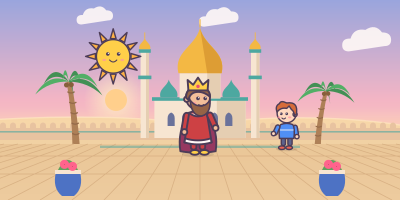
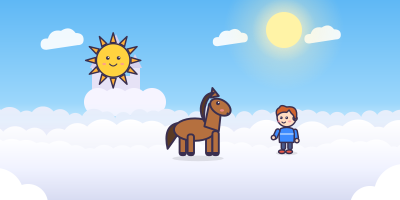
Long ago in Greece, there lived a boy named Phaethon. His mother was a nymph, and she had told him a wonderful secret. His father was Helios, the god who drove the Sun across the sky every day. Phaethon was so proud of this that he told everyone at school. But one of the other boys only laughed at him. "Your father is the Sun?" he said. "Then I am the Moon. Prove it!" The other children laughed too.
Phaethon ran home with his face burning. "Mother," he cried, "is it really true? They all laughed at me, and I could not prove anything." His mother lifted her hands toward the bright sky. "By the Sun himself, who is watching us right now, I have told you the truth," she said. "But you do not have to take my word for it. His palace is in the east, where the morning begins. Go and ask him yourself."
So Phaethon set off toward the sunrise. He walked for many days, until at last he saw the palace of the Sun shining at the edge of the world. It stood on tall columns of gold, and its doors were made of silver. The walls were carved with pictures of the land, the sea and the sky, with sea nymphs riding on fish and rivers winding through forests. It was so bright that Phaethon had to squint his eyes.
Inside, Helios sat on a throne that glittered like diamonds, wearing a purple robe, with rays of light all around his head. Beside him stood the Days, the Months and the Years. Spring wore a crown of flowers, Summer held a bundle of golden wheat, Autumn had feet stained purple with grapes, and Winter had frost in her hair. Phaethon stopped in the doorway, because the light was too strong for him to come any closer.
Helios saw the boy and smiled. He took off his crown of rays so that Phaethon could come near, and he hugged him tightly. "You are my son," he said. "Your mother told you the truth. And so that you will never doubt it again, ask me for anything you want, and I will give it to you. I swear it by the river Styx." That was the most serious promise a god could make. Once it was spoken, it could never be broken.
Phaethon did not even stop to think. "Then let me drive your chariot across the sky," he said. "Just for one day." The smile left his father's face. Helios shook his shining head again and again. "Oh, my son," he said, "I wish I could take back my promise. Ask for anything else. Even Zeus, the king of the gods, cannot drive my chariot. My horses breathe fire, and they pull so hard that I can barely hold them myself."
"The road goes straight up in the morning," Helios went on, "and in the middle of the day it is so high that even I feel dizzy when I look down. Then it drops so steeply that the sea goddess holds her breath every evening. And all around the road wait the great shapes in the stars, the Bull, the Lion, the Scorpion and the Crab. Please, my son, choose something else. The fear in my face is all the proof you need."
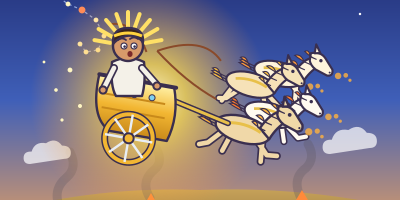
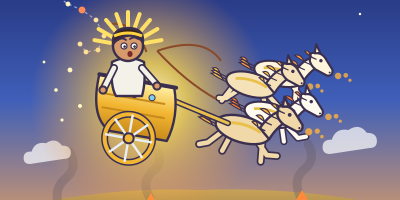
But Phaethon would not listen. He only begged and begged, until at last his father sighed and led him to the chariot. It was made all of gold, with silver spokes and seats set with shining jewels. Dawn opened the purple gates of the morning, and the stars slipped away one by one. The Hours led out the four great horses, snorting flames. Helios rubbed a magic oil on his son's face so that the heat would not burn him.
Then he set the crown of rays on Phaethon's head. "Listen carefully," he said. "Do not use the whip. Hold the reins tight, because the horses run fast enough on their own. Follow the tracks of my wheels. If you climb up too far, the homes of the gods will catch fire. If you dip down too far, the whole earth will burn. Stay carefully in the middle, exactly where I travel." Phaethon jumped into the chariot, grabbed the reins, and laughed with joy.
The gates swung open, and the horses leaped into the sky. They raced through the clouds and left the morning winds far behind. But the horses soon felt that something was wrong. The chariot was too light, because a boy weighs much less than a god. It bounced and swung like a little boat without anything heavy inside it. The horses ran off the road and galloped wherever they pleased, and Phaethon did not know how to stop them.
Phaethon looked down at the earth, far, far below, and his knees began to shake. He wished he had never asked for the chariot. He wished he had never left home. He could not even remember the names of the horses. Then he saw the Scorpion in the stars, huge and dark, with its great claws spread wide, and he was so frightened that the reins slipped out of his hands. Now nobody was holding the horses at all.
The horses dashed wildly up among the stars and then plunged down close to the earth. Where the Sun passed too low, the clouds began to smoke. The grass turned brown, the forests caught fire, and the snow on the mountaintops melted away. Rivers boiled and dried up, and the fish swam down to the deepest parts of the sea to hide from the heat. Some say that is how the great deserts of the world were made.
At last the Earth herself lifted her head out of the smoke and called up to Zeus. "King of the gods," she cried in a dry, cracked voice, "save us! If this goes on, the land and the sea and the sky will all burn up together. Do something, before it is too late!" Zeus looked down and saw that she was right. There was only one thing he could do to stop the runaway chariot before the whole world was destroyed.
Zeus climbed to the top of his tower and threw a single thunderbolt. It struck the chariot, and the frightened horses broke free and ran home. Phaethon tumbled out of the sky with his hair streaming fire behind him, like a shooting star. He fell into a great river far away, and the cool water closed over him. The river put out the flames, but Phaethon never came home again. The nymphs of the river buried him on its bank.
Phaethon's sisters came to the river and cried beside his grave for many days. They cried for so long that their feet grew roots into the soft ground, and their arms became branches. They turned into tall poplar trees, and their tears turned into drops of golden amber. People say that the poplars still stand along that river, whispering in the wind. And every evening, when the Sun goes down, he goes very slowly and very carefully.
Questions
- To find out if Helios was really his father
- To ask for a bag of gold
- To learn how to tame horses
- Zeus told him he must keep it
- He had sworn by the river Styx
- Phaethon's mother was watching
- They were hungry
- The Scorpion chased them
- The chariot was too light and nobody held them firmly
- Straps used to steer horses
- Drops of falling water
- Wheels on a chariot
- It is always worth trying
- Listening to good advice can keep you safe
- Fathers never keep their promises
Words to know
- chariot: horse cart
- reins: steering straps
- throne: royal chair
- galloped: ran fast
- amber: golden tree gum
Answer key: Phaethon and the Sun Chariot
- A. To find out if Helios was really his father
- B. He had sworn by the river Styx
- C. The chariot was too light and nobody held them firmly
- A. Straps used to steer horses
- B. Listening to good advice can keep you safe
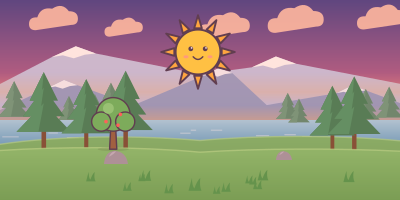
The story in pictures
- Part One · Prove It
- Part Two · The Palace of the Sun
- Part Three · The Promise
- Part Four · The Runaway Horses
- Part Five · The World on Fire
- Part Six · The Poplar Trees
For the teacher: how this passage is levelled
“Phaethon and the Sun Chariot” is a reading level 9 story. Every Peabody story at this level is written and checked to keep sentences to 32 words or fewer, to aim at an average of 11 words a sentence, and to show 55 to 85 words on a screen. At most 11% of its words may be off the familiar-word list. Children in 5th grade start at this level.
| This passage | 1198 words, 15 screens, 5 multiple-choice questions with an answer key, and 5 vocabulary words with kid-sized meanings |
|---|---|
| Longest sentence at this level | 32 words |
| Words on a screen | 55 to 85 |
| Skills practised at this level | vocabulary, spelling |
Reading level 9: the limits, a real sample and the free games. Peabody is a learning app, not an assessment: use the questions to talk about the story, not to grade a child.