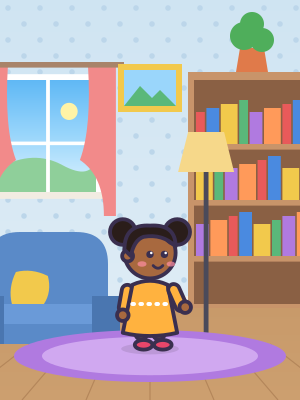
People feel many different feelings during a day. Feelings happen when something happens around us or when we remember something. Feelings can be small or big. Most feelings do not last long. No feeling is simply good or bad. Feelings are often caused by what a person thinks about a situation. Thinking a situation is dangerous tends to bring fear, and thinking it is good tends to bring joy or happiness. Feelings like happy, sad, angry and afraid are normal, and everybody has feelings.
Emotion regulation means changing or managing your feelings. One way is reappraisal, which means trying to change your thoughts about a situation. That can change how you feel. Another helper is the prefrontal cortex, at the front of the brain. It helps people pause, think and choose what to do.
Emotions have helped people survive. Feelings help the body get ready to act. Fear helps keep people safe by getting the body ready to get away from danger. In the fight-or-flight response, the body gets ready to face danger or run from it. Your heart can beat faster when you are scared or angry, and when you feel afraid, your breathing can speed up.
Feelings happen in the brain and the body, and many parts of the brain work together to make an emotion. The amygdala is a small, almond-shaped part of the brain that works like an alarm that helps protect the body from danger. After danger has passed, the parasympathetic nervous system helps the body settle back to calm.
Deep breathing is a way to calm down. Breathing in through the nose and out through the mouth is one way to do it. Pretending to smell a flower and blow out a candle helps children take slow breaths. In a Stanford study, one minute of guided slow breathing lowered the heart rates of children about seven years old. Feeling listened to and understood can also help a person calm down.
People show their feelings with their faces and bodies. A happy person often smiles. People sometimes cry when they feel sad. Babies cry to tell people what they need. Around two months old, a baby starts to smile to connect with other people. Charles Darwin wrote a book about how people and animals show emotions. It was first published in 1872.
With practice, people get better at knowing what they are feeling. Knowing what you are feeling helps people build better relationships.
Words to know
- reappraisal: rethinking
- regulation: managing it
- amygdala: brain's alarm
- parasympathetic: calming system
- Darwin: wrote about emotions