How big can a green anaconda grow? It is one of the largest snakes in the world. It belongs to the boa family. As of November 2026, it is the heaviest snake in the world. The females are bigger than the males. Full-grown females have few enemies because they are so big.
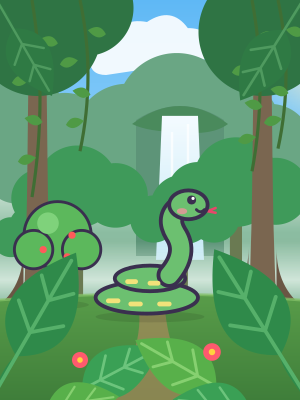
Green anacondas live in South America. They typically live in swamps, marshes and slow-moving streams. A green anaconda is olive-green with dark oval spots. The color and spots help it blend in with the plants in the wet places where it lives. It rests in the sun on river banks and on tree branches that hang over the water.
A green anaconda spends most of its time in the water. It is an excellent swimmer. The name Eunectes means good swimmer. It is the group name for anacondas. As of November 2026, it can stay under water for about 10 minutes. It has its eyes and nose on top of its head. So it can see and breathe while most of its body is under the water.
A green anaconda flicks its tongue to pick up scents in the air. It has heat-sensing pits on its upper lip. They help it find warm animals. It can also feel the vibrations of animals moving nearby. It is not a very active hunter. It waits in the water for animals to swim by or come to the water to drink.
A green anaconda is a constrictor. It wraps its strong body around its food and squeezes. Young ones eat small animals, such as fish. Grown ones eat large animals. They eat deer and capybaras. After a big meal, it can go weeks without eating. It can even go months.
Green anacondas are mostly solitary. That means they live alone, except when they breed. A group of anacondas is called a bed or a knot. A mother does not lay eggs. She gives birth to live babies. In the wild, a green anaconda lives about 10 years on average. That is as of November 2026.
Words to know
- marshes: soft wet land
- capybaras: water rodents
- constrictor: a squeezing snake
- Eunectes: anaconda group
- solitary: living alone
The short version
The green anaconda is one of the largest snakes in the world. As of November 2026, it is the heaviest snake in the world. It lives in South America, mostly in swamps, marshes and slow-moving streams, and spends most of its time in the water.
Quick facts
- Green anacondas live in South America.
- They typically live in swamps, marshes and slow-moving streams.
- A green anaconda has its eyes and nose on top of its head, so it can see and breathe while most of its body is under the water.
- Green anacondas do not lay eggs. A mother gives birth to live babies.
- Female green anacondas are bigger than the males.
What does a green anaconda eat?
Young green anacondas eat small animals, such as fish. Grown green anacondas eat large animals, such as deer and capybaras. After a big meal, a green anaconda can go weeks or even months without eating.
How does a green anaconda hunt?
A green anaconda is not a very active hunter. It waits in the water for animals to swim by or come to the water to drink. The green anaconda is a constrictor: it wraps its strong body around its food and squeezes.