A Tale of Two Cities: the full story
Book One · Recalled to Life
It was, as the celebrated opening declares, the best of times and the worst of times, and in the November of 1775 two magnificent countries, England and France, were each governed by a king and queen who were thoroughly convinced that nothing would ever change. On a bitter and foggy night, a mail coach labored painfully up the hill from Dover, and among its apprehensive passengers sat Jarvis Lorry, a meticulous and extremely cautious gentleman from Tellson's Bank. A breathless messenger overtook the coach and delivered a mysterious note, and Lorry returned an answer that perplexed the messenger completely: "Recalled to life." Behind those three words lay a tremendous secret, which had been waiting patiently for eighteen years. Neither the king nor the queen suspected that, in barely fifteen years, the storm gathering beneath their feet would sweep away everything that they imagined to be eternal.
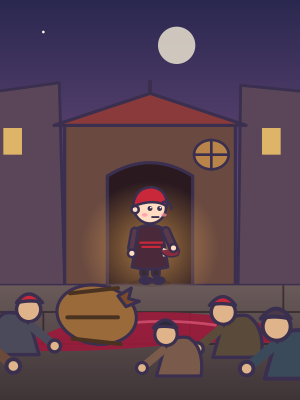
In the impoverished district of Saint Antoine, in Paris, a cask of wine had shattered in the street, and the famished multitude knelt beside the gutters and drank it eagerly from their hands and from the fragments of the cask. One man dipped his finger into the puddle and scrawled the ominous word BLOOD upon a wall. The wine-shop belonged to Ernest Defarge, a stout and watchful man, and to his formidable wife, who sat at the counter knitting and appeared never to look at anything. In an attic above the shop sat a white-haired prisoner, bent over a bench, mending shoes. He had spent eighteen years in the Bastille, he could no longer remember his own name, and he identified himself exclusively as One Hundred and Five, North Tower. It was Defarge, the doctor's former servant, who afterward led Lorry and Lucie up the dark staircase to that attic, hat in hand, trembling with a loyalty and a sorrow that he did not trouble to conceal.
His name was Doctor Alexandre Manette, and before his mysterious disappearance he had been a distinguished physician in Paris. He had an extraordinary daughter, Lucie, whom he had never seen grown, and Lorry had traveled to France to escort them both back to England. When Lucie, a young woman with golden hair and a gentle but determined countenance, knelt beside her father and spoke tenderly to him, he stared at her as though he were struggling to awaken from an interminable dream. He touched a single golden thread of her hair, and a tear fell. Gradually, through months of patience and devotion, he recovered his senses, although for years afterward he would occasionally seek out a bench and feel for his tools. Lucie, who had believed her father dead for most of her life, discovered that she had been given back the person whom she had most loved and least known, and she resolved never to be separated from him again.
Book Two · The Golden Thread
Five years later, in London, a strikingly handsome young Frenchman named Charles Darnay stood in the prisoner's dock at the Old Bailey, accused of treason against the king. Two disreputable informers swore they had witnessed him copying military secrets, and the court was fully prepared to condemn him. Then a brilliant lawyer's assistant, a careless and dissolute fellow named Sydney Carton, was asked to stand where the witnesses could examine him, and he resembled the prisoner so remarkably that nobody could be certain which of them had actually been observed. The informers, it soon appeared, were professional spies who lived by selling other people's lives for money, and the prosecutor's confident case collapsed before the astonished jury. Darnay was unanimously acquitted. That evening, Carton, whose considerable talents had been squandered upon idleness and drink, studied his own reflection in a mirror and concluded that he utterly despised the man he saw.
After the trial, Carton invited the freed prisoner to dine at a tavern, and there he inquired, with a bitter smile, whether Darnay believed he was truly liked. Darnay, who was courteous and rather embarrassed, replied that he was grateful. Carton answered that he cared nothing for gratitude, and that he had studied the resemblance between them in the courtroom and been struck by it like a blow. He wondered aloud what he might have become, had he been born with Darnay's good fortune and steadfast character. When the stranger had departed, Carton continued to drink alone for hours, and he finally fell asleep with his head upon the table and his candle guttering beside him in a pool of tallow. Stryver, the loud and boastful lawyer for whom Carton did all the thinking, accepted the credit and the rewards, while his shadow took only the wine and the loneliness.
Both men fell in love with Lucie Manette. Darnay had abandoned France because he was ashamed of his arrogant and merciless family, the Evrémondes, and on the morning of his wedding he confided his real name to Doctor Manette. The doctor was profoundly shaken, but he gave his blessing nevertheless, because his daughter's happiness mattered more to him than his own distress. Sydney Carton loved her too, although he knew he was unworthy of her, and he visited her privately to say that nothing could ever come of it. "For you, and for any dear to you, I would do anything," he promised solemnly. She never forgot those words, and neither did he. Lucie was moved to tears, and she told her husband that night that she believed there was a great and generous goodness hidden in that unhappy man, and she begged him always to be gentle with him.
The wedding proceeded joyfully, and Lucie, who suspected nothing, was radiant. But as soon as the young couple had departed, Doctor Manette retreated to his old bench in the attic and began to repair shoes again, as though the terrible years had suddenly overtaken him. Lorry and the faithful Miss Pross watched anxiously over him for nine days and nights, and they concealed the bench from Lucie, who must never suspect. On the tenth day, the doctor awoke and looked around like a man ascending from deep water, and he spoke calmly and inquired after his daughter. Lorry, who had loved the doctor for many years, said afterward that he would rather have lost his entire fortune than see him return to that bench, and he never once mentioned it to Lucie. The tools were quietly removed, and for many years he did not ask for them again.
In the peaceful corner of London where the Manettes lived, Lucie sat with her small daughter and sometimes imagined that she heard echoing footsteps, very far away, approaching nearer through the years. Lorry lived close by as a trusted friend, and so did Miss Pross, the loyal and ferocious Englishwoman who had cared for Lucie since childhood. The doctor adored his son-in-law and his granddaughter so devotedly that, for a long time, nobody who visited the house could have imagined a more peaceful and affectionate family. Sydney Carton visited on Sundays, and the little girl loved him best of all. Those footsteps were the sound of an entire nation rising, for the French people had been starved, taxed and scorned for so long that they were prepared to shatter every chain, and the tempest that was coming would spare nobody.
Meanwhile in Paris, the aristocrats were deaf to the misery that surrounded them. Darnay's uncle, the Marquis, a cold and haughty nobleman, drove his carriage through Saint Antoine at such a reckless speed that it crushed a child, and he flung a single coin to the grieving father as though the matter were trivial. That night the Marquis was discovered stabbed in his bed, with a scrap of paper pinned to his heart: "Drive him fast to his tomb." The Defarges, who maintained an enormous register in the stitches of Madame Defarge's knitting, inscribed the name of every Evrémonde within it, one by one, and she never forgot a single stitch. The man who had committed the deed was the dead child's father, Gaspard, who was soon captured and executed, and the people of that village never forgot it, nor did they forgive.
Book Three · The Track of a Storm
The tempest burst in July of 1789, when the furious crowds of Paris, with Defarge in their midst, attacked the Bastille and tore it apart. Defarge hurried directly to cell One Hundred and Five, North Tower, and searched among the stones until he discovered a hidden paper. In the years that followed, a revolution that had begun with hunger and justice became increasingly savage, and the people who had been oppressed became oppressors in their turn. Anyone bearing a noble name could be dragged before a tribunal, and a tremendous blade, which they called the guillotine, descended daily in the public square. In England, Darnay received a desperate letter from an old family servant, imprisoned in Paris, who implored him for help. The seven prisoners who were found in its cells blinked in the sunlight, as bewildered as the doctor had once been, and the crowd carried them out upon its shoulders. His name was Gabelle, and he explained that he was imprisoned merely because he had once served a noble family, and that nobody on earth could vouch for him except the master whom he had faithfully served.
Darnay felt that he could not abandon a faithful man who was in peril on his account, so he resolved to travel to France, informing Lucie only that he would soon return. The moment he crossed the frontier, he was arrested as a nobleman who had deserted his country, and he was confined in the prison of La Force. Doctor Manette and Lucie followed in alarm. The doctor was respected by the revolutionaries, who honored the memory of the Bastille prisoner, and for more than a year he exerted his influence to protect his son-in-law. When the doctor rose to speak, the whole crowd grew quiet, for the people who had stormed the Bastille loved no one better than the man who had been shut inside it, and they cheered him until the walls shook. At last, in a crowded and tumultuous courtroom, he obtained Darnay's release, and Lucie fainted with joy in her husband's arms.
Paris, in those months, had become a city consumed by suspicion and terror. Every household was required to display the names of its inhabitants upon the door, a sudden knock in the night could signify arrest, and crowds danced in the streets in a frenzied circle called the Carmagnole, while the guillotine continued its dreadful labor in the square. Lucie rented a small room near the prison, and each afternoon she stood for hours on a certain corner, in rain or sunshine, because a window of La Force was visible from there and Darnay might catch a glimpse of her face. Darnay did see her once, and it kept him alive through the darkest hours. Doctor Manette, whose white hair and gentle manner were known throughout the district, went daily to the prison and the tribunals, and his reputation as the prisoner of the Bastille opened every door that was closed to others.
That very night, the Defarges returned with a new accusation and a letter. During his long captivity, Doctor Manette had secretly composed a record of everything he knew, and Defarge had found it concealed in the wall of his cell. It described, in elaborate and terrible detail, how the old Evrémonde brothers had wronged a peasant family, and how, when Manette attempted to report the crime, they had arranged for him to be sealed in the Bastille. Read aloud before the tribunal, the letter condemned the entire family, down to the last descendant. Darnay, to the unspeakable anguish of the doctor who had written those words, was sentenced to die upon the guillotine within twenty-four hours. The doctor himself, who had believed that his own suffering had earned his family safety, was struck dumb, and his white head sank upon his chest in a grief that was beyond all tears.
Sydney Carton arrived in Paris that same day, quietly and without announcement, and sat down in a corner of the Defarges' wine-shop. There he overheard Madame Defarge declare, in a low and level voice, that she intended to destroy Lucie and her little daughter as well. Her husband protested that the child could not possibly be guilty, but she replied that the entire family must perish, root and branch, since the register in her knitting allowed no exceptions. Madame Defarge was a woman who had never forgotten a wrong, for the Evrémonde brothers had destroyed her own family long before, and for that reason she had hardened her heart against every person who bore the name. Carton paid for his wine, murmured a few hesitating, ungrammatical words of French, and walked out into the evening with a countenance that revealed nothing at all, although every nerve in his body had turned cold.
He went immediately to Lorry, who was waiting with the passports for the Manette family, and he requested that the papers be kept safe and that a coach be ready in the courtyard by two o'clock on the following afternoon. Then he wandered through the darkened streets for hours, among the shuttered shops, and he discovered that he remembered the solemn words that were read at his father's burial, concerning the resurrection and the life. They rose in his mind again and again, and for the first time in many years he felt something resembling serenity. By morning he understood, more clearly than ever before, exactly what he meant to do. He had been, all his life, a man who observed the world with careless wit and dismissed it, yet in those last hours he applied himself to every detail with the cool accuracy of a lawyer and the courage of a soldier.
On the last morning, he compelled a treacherous spy named Barsad, who had once lied against Darnay in London, to admit him to the prison, and he found Darnay's cell. He understood that a single hasty mistake could destroy the most noble resolution, and so he arranged the clothes, the papers and the hour with the patience of a man who has finally found a purpose. He did not disclose his plan. He merely commanded Darnay to write a letter, and then pressed a drugged cloth to his face until his old double slept. Carton exchanged clothes with Darnay and signaled the spy to carry the unconscious man out, as though a sick friend had fainted from grief. Left alone in the cell, he waited calmly for the appointed hour. In the prison yard, a young seamstress, who had been condemned with the others, studied the stranger closely and understood. "Are you dying for him?" she whispered. "And his wife and child," he answered.
Outside the walls, the coach was waiting, and Darnay lay in the corner, still insensible. In the shadows beyond the prison gate, a guard, who could think of nothing but his duty, examined the passports of the departing travelers and found no cause for suspicion in any of them. They passed through every checkpoint without suspicion, and the exhausted horses carried the Manettes out into the open countryside. The coachman urged his horses forward over the rutted road until the lights of Paris had sunk behind the trees, and the dark hills of the countryside closed protectively around the fugitives. At the very moment of their departure, Madame Defarge, consumed by fury, went to find Lucie, with a pistol hidden inside her dress. In the empty rooms she met only Miss Pross, who stood against the door and refused to let her pass. The two women struggled desperately, and the pistol discharged. Madame Defarge fell dead upon the floor, and Miss Pross, deafened forever by the explosion, fled from the house. The family had escaped, and they never looked back at the city.
The Last Day
That afternoon the carts rolled through the crowded streets, and in one of them Sydney Carton sat beside the seamstress, who begged him to hold her hand. He assured her that the last minutes would pass swiftly and that she would not be afraid. Those who stood nearest to the scaffold said afterward that he had the most peaceful face they had ever witnessed in that dreadful place. He also saw, beyond the long years and the smoke, a beautiful city and a brilliant people rising out of the ruins, and the children of the family he had loved growing up in peace within it. In his final thoughts, he saw the Manettes in England, and a boy who bore his name, and he saw himself, no longer a wasted man, honored in their memory. "It is a far, far better thing that I do, than I have ever done," he said, "it is a far, far better rest that I go to than I have ever known."