The Perseids for Kids
Next peak · 286 nights to go
Night of 12–13 August 2027 · Moon 85% · Good
Worth a look after dark, if the sky is clear.
From 10 pm you might count ten or more in an hour if the sky is dark.
The next Perseids peak is the night of 12–13 August 2027. A bright 85% Moon up for much of the night washes out the faint ones. Verdict: good. Worth a look after dark, if the sky is clear. At best a dark sky gives about 100 an hour, by the American Meteor Society's calendar; the Moon is from astronomy-engine.
The Perseids are summer shooting stars. They come in August when it is warm outside. Lie on a blanket and count.
The Perseids come from Comet Swift-Tuttle and are the best-loved shower in the north, because August nights are warm. At the peak a dark sky gives a meteor every minute or two, and many are bright.
Comet 109P/Swift-Tuttle is about 26 kilometers across and goes around the Sun every 133 years. The Perseids' rate reaches about 100 an hour from a dark site, with many bright meteors and fireballs. A bright Moon in some years cuts the count a lot.
The comet the Perseids come from is about 26 kilometers wide, bigger than the rock that ended the dinosaurs.
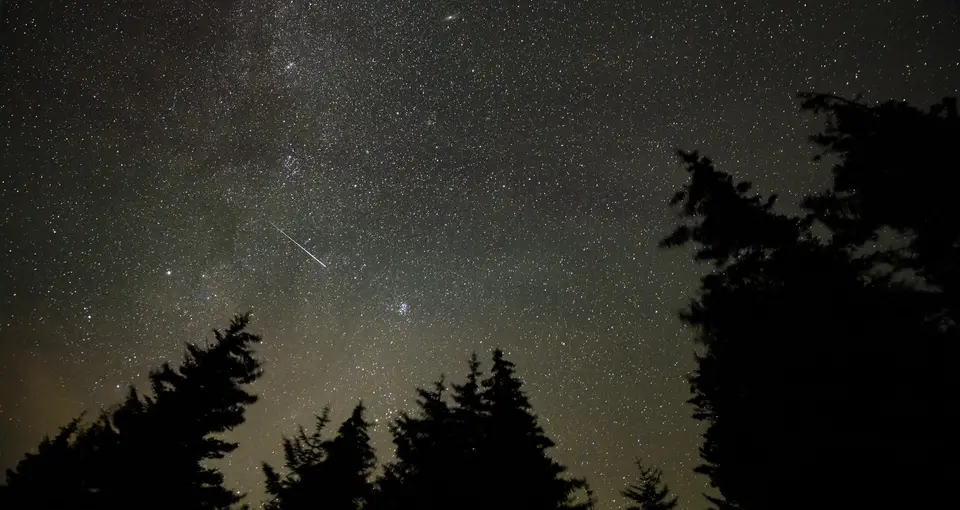
Which way to look, and when
North-east, below the W shape of Cassiopeia; rising through the night.
Good after 10 pm, best before dawn. Active 14 July to 1 September.
Where does it come from?
The Perseids are dust from Comet 109P/Swift-Tuttle. The bits hit the air at about 59 kilometers a second and glow as they burn up. The streaks seem to start from Perseus, which is how the shower got its name.
Every peak in our table
| Night of 12–13 August 2027 | Good. A bright 85% Moon up for much of the night washes out the faint ones. |
|---|
Some calendars give a peak one night either side; a shower is active for days around it, so the nights next to the peak are worth a look too.
How to watch
- Go out with a grown-up, dressed warmer than you think, with a blanket or a reclining chair.
- Put phones away and give your eyes twenty minutes to get used to the dark.
- Look up at the whole sky, not at one spot, and count every streak you see.
The shower night kit
One sheet to take outside: a box for every ten minutes, a line for the brightest one, and a tick for the clouds. Counting is the game.
The Perseids: my shower night
Peak: the night of 12–13 August 2027. Look up at the whole sky. The streaks point back to Perseus. peabody.kids/space/showers/perseids
☐ Warm coat and hat ☐ Blanket or chair ☐ Grown-up ☐ Phones away for 20 minutes
| Ten minutes from | Shooting stars I counted (|||| ||) |
|---|---|
| ____ : ____ | |
| ____ : ____ | |
| ____ : ____ | |
| ____ : ____ | |
| ____ : ____ | |
| ____ : ____ |
The brightest one went from ________________ to ________________.
Clouds? ☐ none ☐ some ☐ lots · My total: ______
If the sky is clear. Peak night and rate: American Meteor Society; the Moon: astronomy-engine.
Other showers
“Don't look at one spot. Lie back and let your eyes take in the whole sky.”